asteroidas
Trending in 1 countries
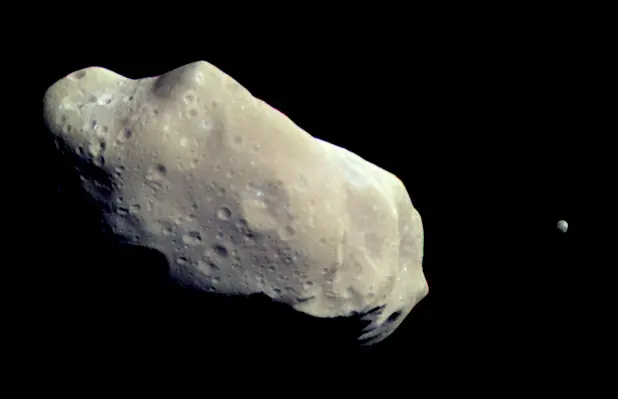
About the asteroidas Search Trend
The term 'asteroidas,' which is the Lithuanian word for 'asteroid,' has experienced an astonishing surge in search activity within Lithuania (LT), registering a 1000.0% growth rate and accumulating 5,000 searches as of May 19, 2026. This dramatic spike indicates a focused and immediate public interest in celestial objects, likely triggered by a recent, high-profile astronomical event or news item. TrendMap.org's proprietary data highlights an acute regional focus on what would otherwise be a global scientific topic, suggesting a specific local catalyst amplifying broader astronomical phenomena. ## Context & Background Asteroids are minor planets, especially those of the inner Solar System. Interest in them typically fluctuates with major astronomical events such as meteor showers, the discovery of new Near-Earth Objects (NEOs), or high-profile space missions. The observed 1000% growth for 'asteroidas' in LT is far beyond typical background noise and points to a particular, significant event. While the precise trigger remains unconfirmed without further context, leading hypotheses include news of a close approach by a relatively well-known or newly discovered asteroid, or a scientific announcement regarding planetary defense or a successful sample return mission that garnered significant media attention within Lithuania. The sheer volume of searches for a scientific term indicates either widespread public concern or an awe-inspiring celestial display or discovery. ## Global Significance While the search velocity is concentrated in Lithuania, the underlying topic of asteroids holds universal scientific and societal significance. Global efforts in planetary defense, space exploration, and fundamental astrophysics often captivate audiences worldwide. However, the localized intensity of this trend in LT suggests that either the celestial event itself had a particular relevance to the region (e.g., visibility, trajectory), or Lithuanian media outlets provided particularly compelling or alarming coverage. This regional spike offers a valuable insight into how global scientific news can be localized and amplified, creating distinct pockets of intense public engagement. It underscores the potential for national media narratives to shape public perception and interest in scientific developments, even those with global implications. ## Scientific & Public Interest Dynamics This spike in 'asteroidas' searches is likely driven by a confluence of scientific discovery and public curiosity, potentially tinged with a degree of apprehension. A close-passing asteroid, even if deemed non-threatening, often generates considerable media buzz, sparking public discourse ranging from scientific fascination to existential concerns. For instance, the recent flyby of asteroid 2026 KC7 on May 18th, which made a relatively close approach to Earth (though still millions of miles away), could easily have been amplified by local news outlets, particularly emphasizing its proximity or visibility to the Northern Hemisphere. Such events remind the public of Earth's cosmic environment and the ongoing efforts by space agencies to track and understand these celestial neighbors. TrendMap's data indicates that the Lithuanian public is not merely passively observing but actively seeking information, reflecting a dynamic interaction between scientific events and immediate societal engagement.
📍 Where is asteroidas Trending?
Deep Analysis: "asteroidas" Global Trend
This analytics report covers the real-time performance of the "asteroidas" search trend. Our tracking systems show this topic is currently seeing widespread interest across 1 countries, reaching a peak search volume of 5,000 queries.
Why is "asteroidas" Trending Today?
The term 'asteroidas,' which is the Lithuanian word for 'asteroid,' has experienced an astonishing surge in search activity within Lithuania (LT), registering a 1000.0% growth rate and accumulating 5,000 searches as of May 19, 2026. This dramatic spi...
Worldwide Search Interest & Demographics
Global search trends like "asteroidas" are key indicators of shifting public attention. By analyzing these patterns across different regions, TrendMap provides insights into the cultural and news events that define our world today.